20MM · 40MM MITRE · 6 TESTS · 5 SURFACES
Benchtop materials compared: how each surface behaves in a working kitchen
The honest difference between benchtop surfaces is not what they look like in a showroom. It is what happens when a pan comes straight off the cooktop, when turmeric sits overnight, when a join has to fall somewhere in a four-metre run, and when a chip appears two years in. This guide compares the surfaces on those terms, in the order the decision is usually made.
6 TESTS · RUN BEFORE THE FINISH IS CHOSEN
Six tests to run before a finish is chosen
Every surface below is strong somewhere and weak somewhere else. Decide which of these six matters most in your house, and the shortlist writes itself.
20MM SLAB · SEALED · UNIQUE PIECE
Natural stone
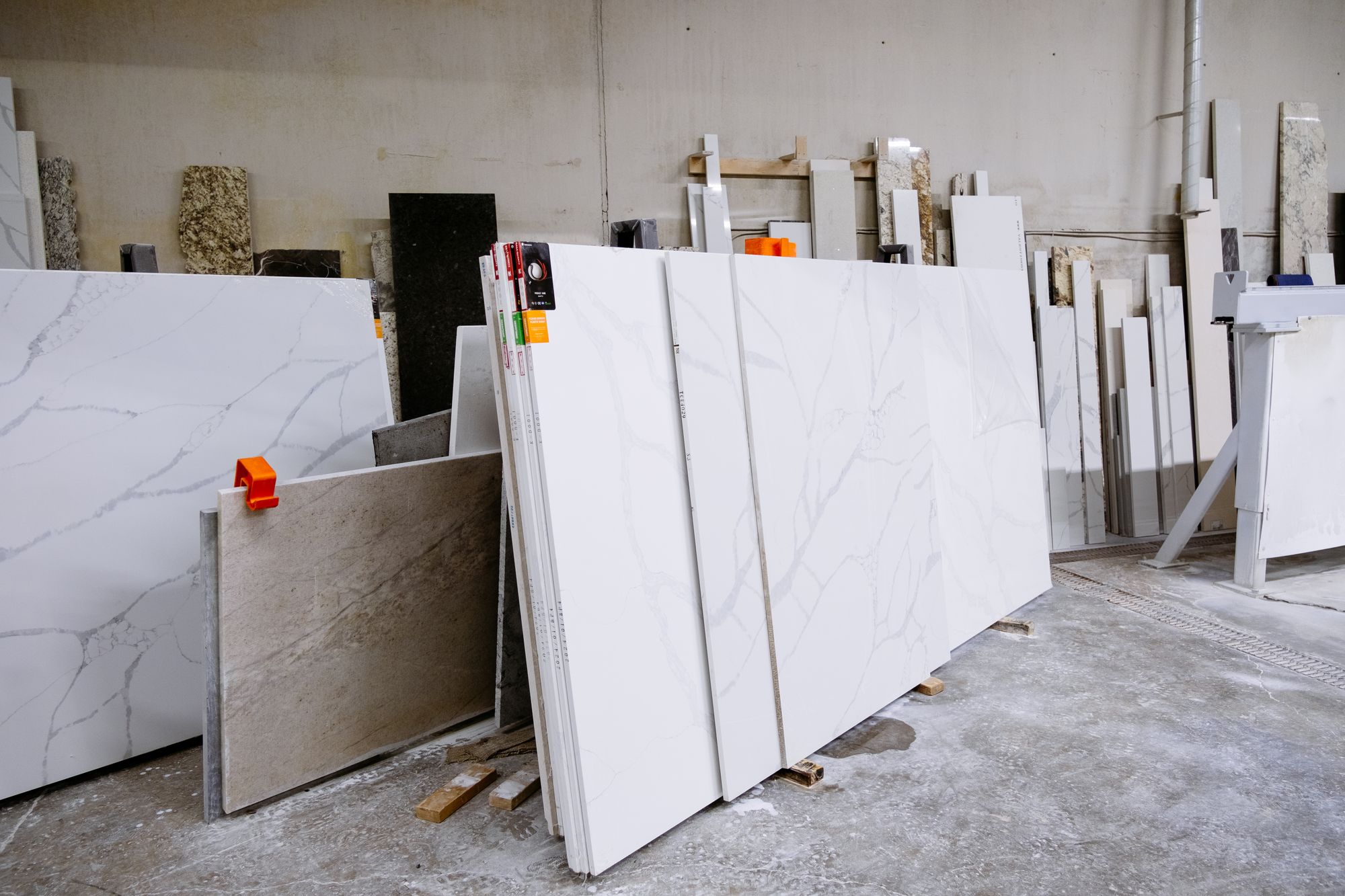
Granite and quartzite are hard, heat-tolerant and forgiving in a busy kitchen. Marble is the opposite trade: soft, acid-sensitive, and it will etch where a lemon or a splash of wine sits — which owners either love as patina or regret within a month. All of it is porous to some degree and wants periodic sealing. Every slab is its own piece, so veining and colour run should be chosen in person and the cut layout marked before fabrication. Chips and dull spots can usually be polished back on site.
12MM · 20MM · MITRED EDGE
Porcelain & sintered surface
Non-porous, heat-stable, colour-fast and effectively immune to staining — the easiest surface to live with if maintenance is your first test. It is also very hard, which cuts both ways: it resists scratching but can chip under sharp point impact at an edge, and a chip is difficult to disguise. Thin slabs suit full-height splashbacks and mitred returns. If the pattern is printed rather than through-body, it stops at the surface, so edge and cut-out detailing matters.
16MM · 33MM POSTFORMED
Laminate
32MM · 40MM STAVE · OILED FINISH
Solid timber, and where it earns its keep
Engineered stone was the default Australian benchtop for two decades. Its manufacture, supply, processing and installation were prohibited nationally from 1 July 2024 in response to silicosis risk, so it is no longer specified in new kitchens. An existing benchtop can stay in place; removal or alteration is regulated work with its own dust-control requirements. In practice, the demand has moved to porcelain and sintered surfaces, which answer most of the same questions, and to natural stone where a unique slab is wanted.
20MM EDGE · 40MM MITRE · 300 OVERHANG
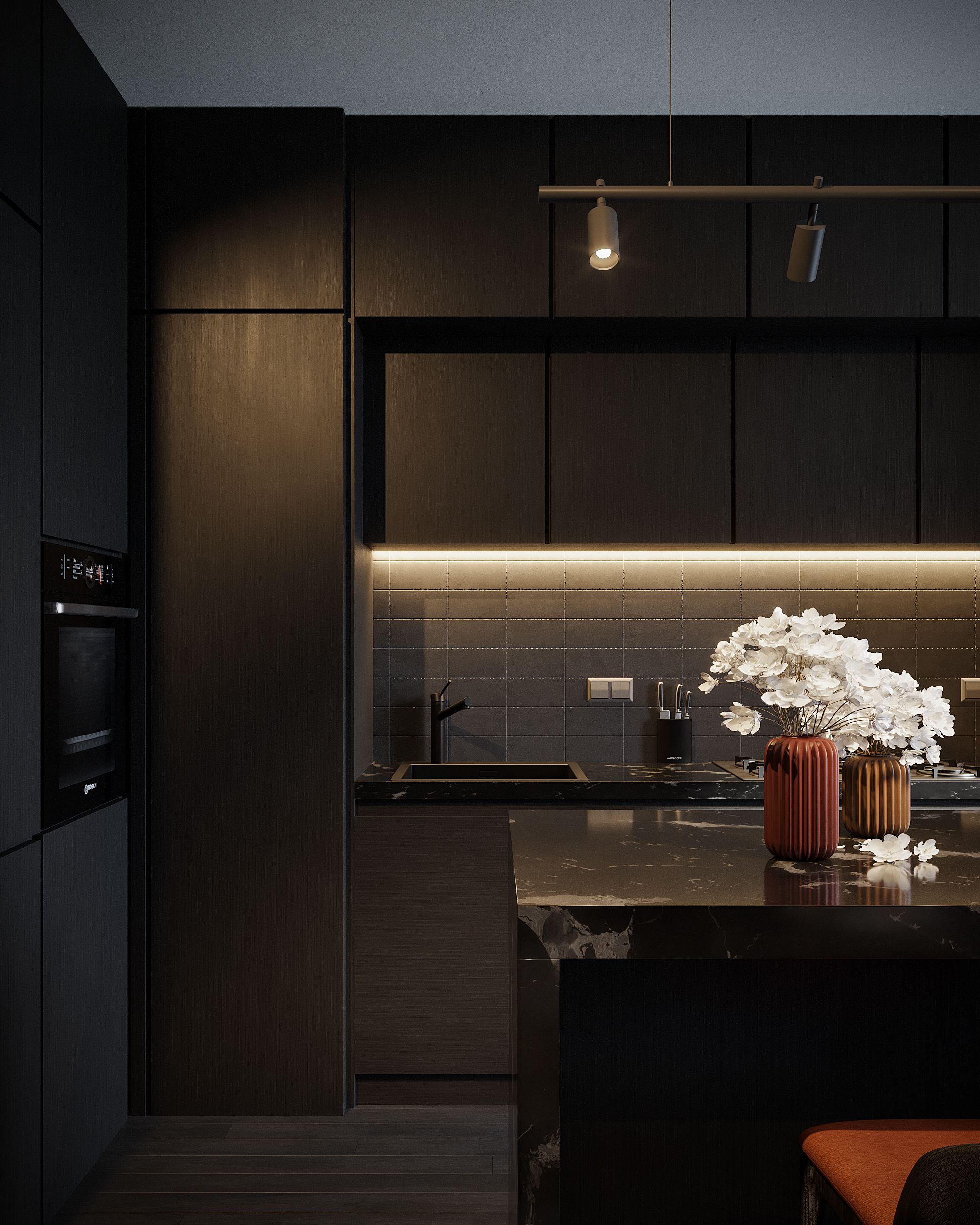
Thickness, edges and where the joins fall
4 HOUSEHOLDS · 1 SHORTLIST EACH
Matching the surface to the household
READ NEXT · 01
Sizing, seating overhangs, clearances and where services run — the decisions that set how thick the benchtop above them needs to be.
READ NEXT · 02
Tile, glass and full-height stone, and how the splashback selection either supports or fights the benchtop you have just chosen.
READ NEXT · 03
Carcass materials, door finishes, hinges and runners — the boxes that have to carry a heavy stone or porcelain top without moving.
INDEX